
Giardiasis
Giardiasis
Key Points
- Giardiasis is the most common intestinal protozoa in humans and is a leading cause of diarrhea worldwide.
- It affects more children than adults and it is more common (but not exclusively seen) in developing countries.
- Most patients are asymptomatic. Others may have an acute diarrheal syndrome that may or may not progress to a chronic diarrhea and malabsorption.
- Treatment of choice are imidazoles (e.g. tinidazole, metronidazole).
Background, Epidemiology & Life cycle
Giardia spp. (G. lamblia, G. duodenalis, G. intestinalis) are the most common intestinal protozoa in humans. It is globally distributed and affects individuals from all ages. However, certain populations are disproportionately affected by giardiasis, including:
- Children under the age of 5 (e.g., in daycare centers).
- People residing in or traveling to developing countries
- Industrialized countries have a 2-5% prevalence of Giardia, compared to 20-30% in developing countries
- Immunocompromised populations (e.g., PLWH, cystic fibrosis, humoral immunodeficiencies)
- Men who have sex with men (MSM)
Giardia spp. exists as two parasitic forms: a cyst and a trophozoite. The cyst stage is responsible for the transmission, and the trophozoite stage is responsible for the clinical manifestations of giardiasis.

Figure 1. Giardia spp illustration (made by Juliet and Nicole Halaseh)
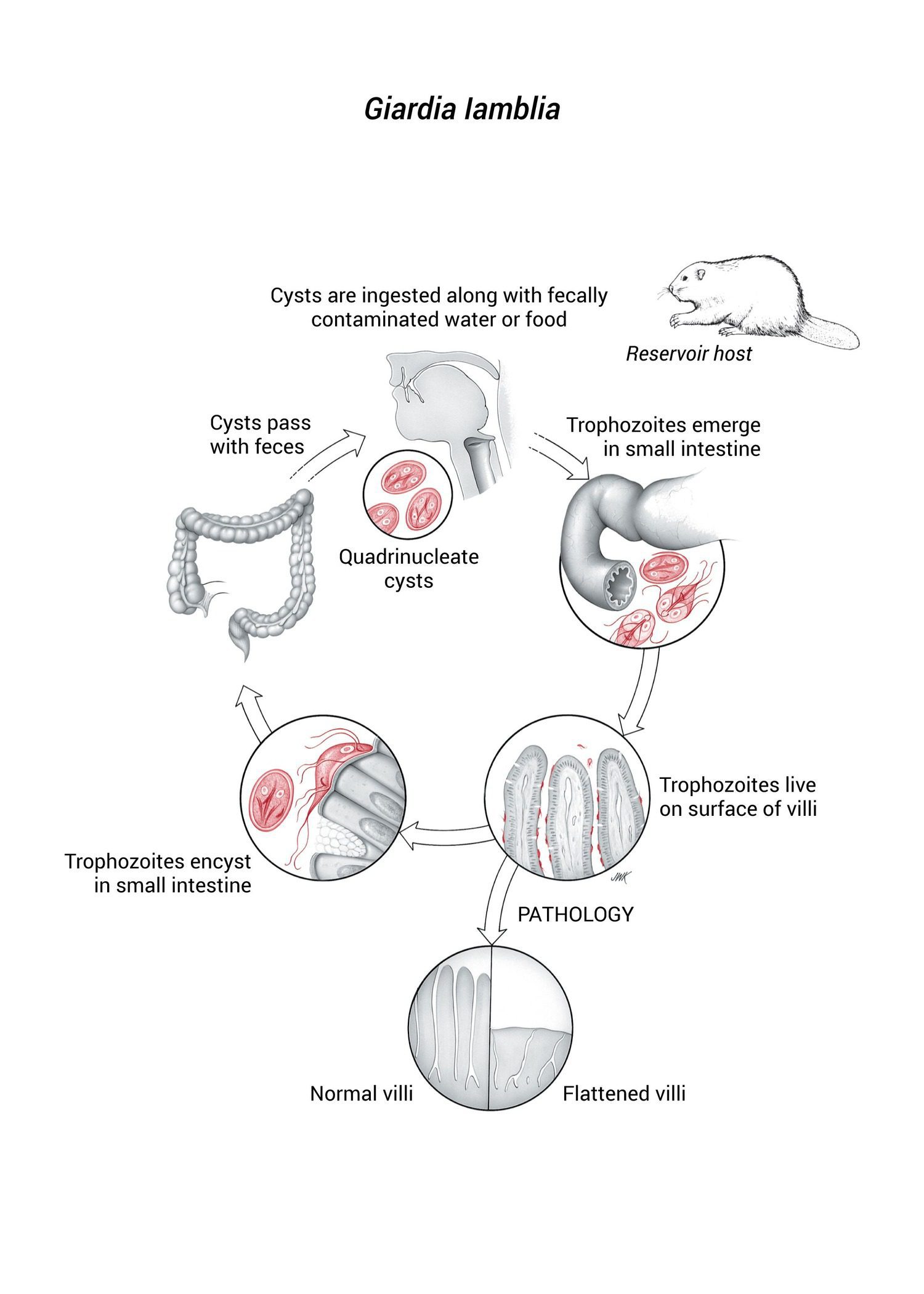
Figure 2. Life cycle of Giardias spp.
Clinical Presentation
Incubation period is usually ~1-2 weeks. Clinical spectrum of giardiasis is as follows:
- Asymptomatic (chronic cyst passers) → it is estimated that a large proportion of those with giardiasis do not progress to an ill state, and merely pass cysts with feces.
- Acute disease → the most important symptom is diarrhea (classically described as foul-smelling), with nausea, flatulence, weight loss, abdominal discomfort, and bloating. Rarely, patients will have fever or vomiting. Acute disease is typically self-limited.
- Chronic disease → some patients (if untreated) may develop a chronic diarrheal syndrome, with substantial weight loss, abdominal discomfort, and steatorrhea. It is associated with malabsorption syndromes. Patients with immunocompromising conditions (e.g. HIV, chemotherapy, cystic fibrosis, IgA deficiency) are more prone to protracted/severe disease.
Diagnosis
- Microscopy → examination of samples (e.g., stool or duodenal aspirates) through wet mount or concentration techniques +/- staining (e.g. trichrome stain, methylene blue and iodine). Occasionally, trophozoites can also be seen in the surface of duodenal biopsies.
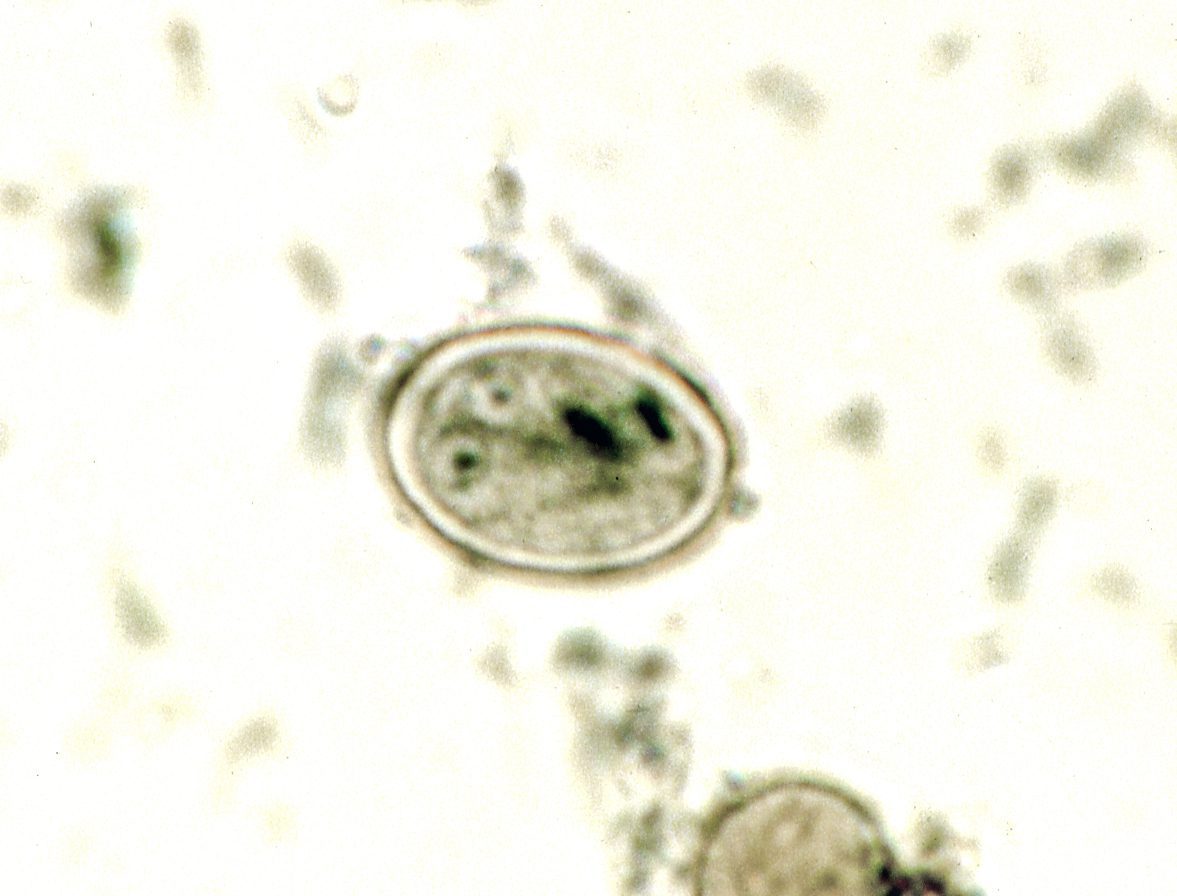
Figure 3. Cyst of Giardia spp.
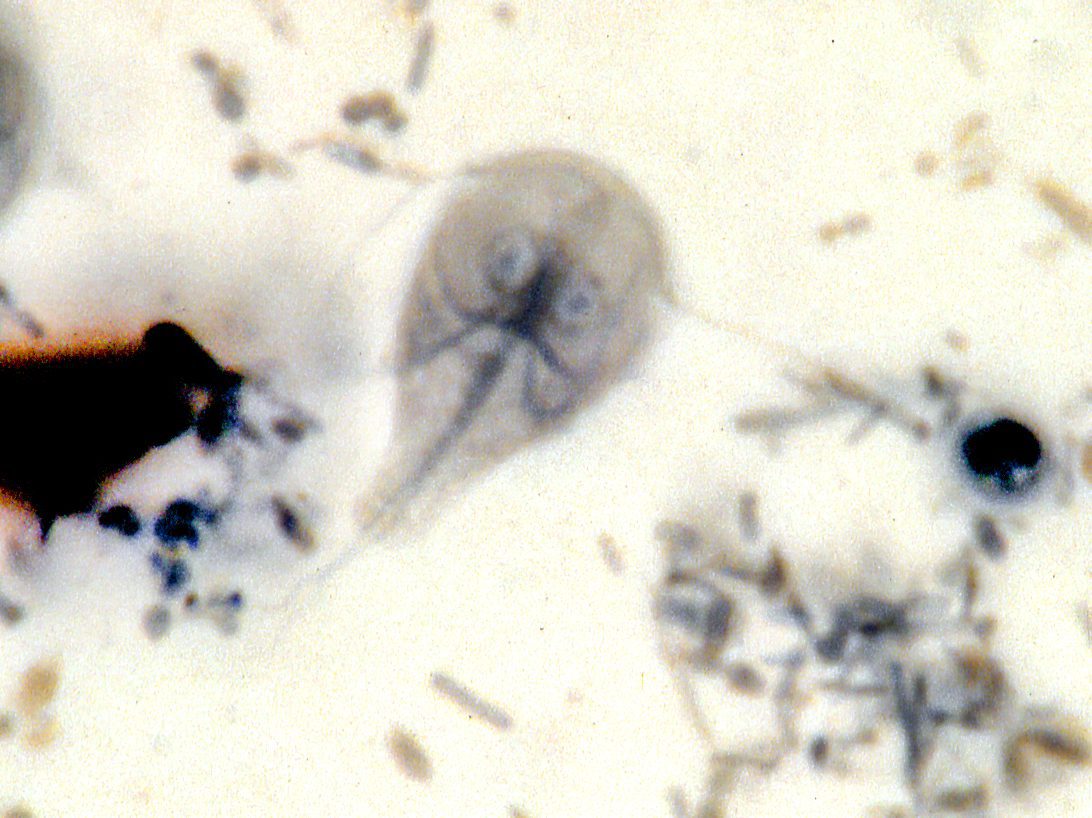
Figure 4. Trophozoite of Giardia spp.
- Antigen-based ELISA (stool) → more sensitive than microscopy (up to 90-99%), but antigen may persist in stool after treatment. Should not be used as a test of cure! Some assays co-detect Giardia, with Cryptosporidium and/or Entamoeba histolytica.
- Nucleic acid amplification tests (NAATs) → these are commercially available assays that can detect multiple viral, bacterial and protozoal pathogens. High degree of sensitivity (up to 90-100%) but not widely available.
Treatment
Treat all symptomatic cases. Cure rates are variable with standard treatment (80-95%). Treatment of asymptomatic carriers is controversial but generally favored, particularly when patients have a high-risk of infecting others (e.g. works in a daycare), handles food or water (e.g. cafeteria worker) or is in contact with immunocompromised populations (e.g. healthcare workers). Treatment options are as follows:
| Drug | Regimen (oral) | |
| Preferred options | Tinidazole |
|
| Metronidazole |
|
|
| Another preferred option | Nitazoxanide |
|
| Alternative options | Quinacrine |
|
| Albendazole |
|
|
| Paromomycin |
|
Table 1. Treatment options in giardiasis
Prevention
- Avoid fecal contamination of the environment (e.g., proper disposal of human waste, avoid going in pools while sick with giardiasis).
- Prevent the ingestion of cysts (e.g., drinking safe water, boiling untreated water, hand hygiene).
- Counsel patients on the increased risk of enteric infections (inc. giardiasis) with oral-anal practices.
- For additional information, please check out the CDC Yellow Book.
Assessment: Did I Get It? (DIG IT)
DIG ITs are online modules designed to reinforce key learning points for you! Please choose the best answer, then check all of the answer choices for more learning pearls
Other Media Resources (Optional)
References
This lesson was last updated May 6 2025