English
  Spanish
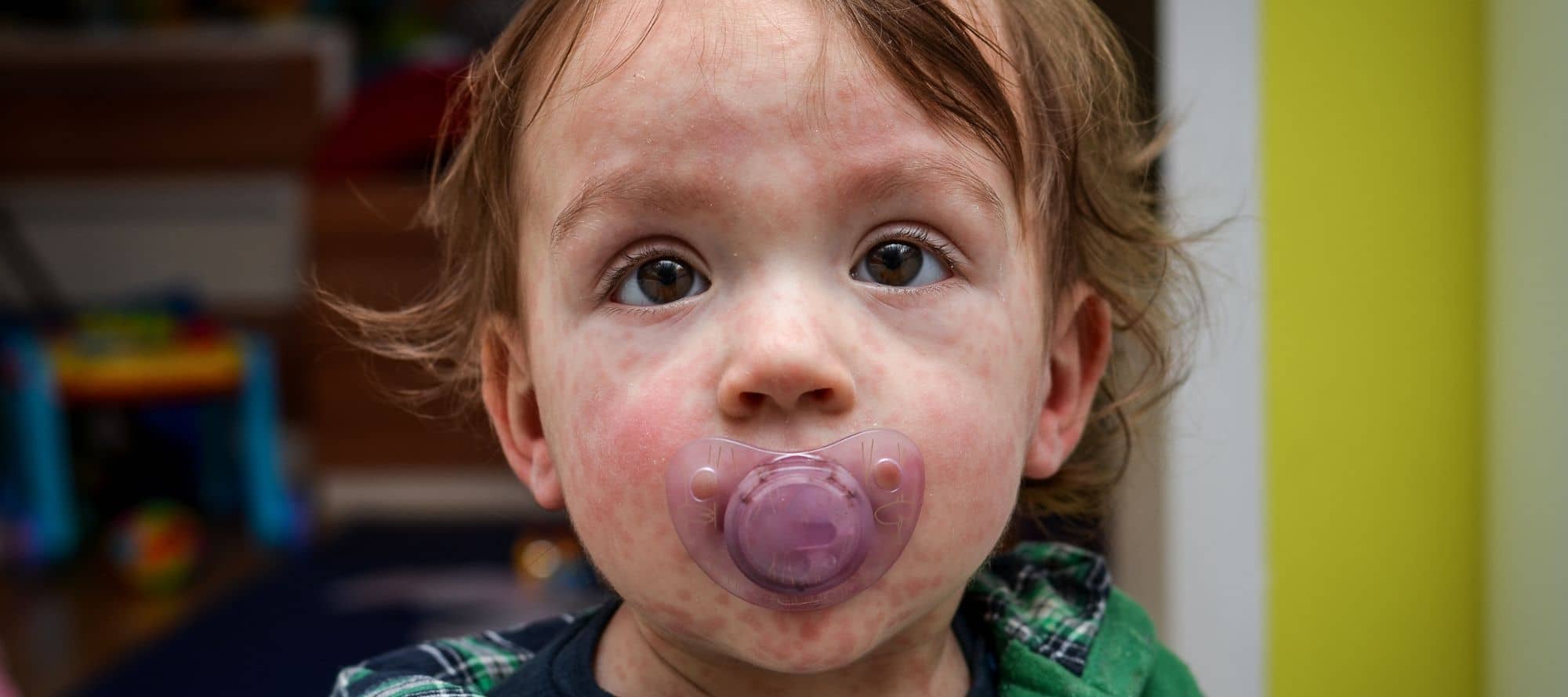
Assessing the Transmissibility and Outbreak Risk of Measles in the United States, 2024-2030
Investigators assessed the local transmissibility and outbreak risk at present (2024-2025) and in future years (2025-2030) under various vaccination scenarios in the United States. The estimated spatiotemporal outbreak risk pattern is consistent with current observations. Projections through 2030 show the reproduction number could exceed 1 – indicating a potential of large outbreaks – within 5 (or 2) years should vaccination coverage decline by 10% (or 50%).
Influenza Vaccination During Pregnancy and Infant Influenza in the First 6 Months of Life
This is a cohort study among pregnant individuals enrolled in Kaiser Permanente Northern California (KPNC) and their infants. They followed all infants from birth until the first occurrence of a polymerase chain reaction test result positive for influenza, the infant reached age 6 months, death, disenrollment from KPNC, or the end of the study on December 31, 2022. They compared the hazard of influenza in infants whose mothers were vaccinated against influenza during pregnancy with those whose mothers were unvaccinated. There were 245,498 infants included in the study, 46.0% were born to vaccinated mothers. The incidence of influenza was lower among infants of vaccinated mothers than unvaccinated mothers (0.12% vs 0.30%). Vaccination during pregnancy was associated with a reduction in infant influenza in any clinical setting by 44.4% (95% CI, 31.4–54.9%). Vaccination during the first trimester was associated with a reduction in infant influenza by 11.3%, a reduction of 51.5% during the second trimester, and a reduction of 59.3% during the third trimester.
Influenza Vaccination in Japanese Children, 2024/25: Effectiveness of Inactivated Vaccine and Limited Use of Newly Introduced Live-attenuated Vaccine
Lots of limitations here due to low vaccine uptake in Japanese children but researchers concluded that the 2024-25 flu vaccine was 57% effective against outpatient flu and 73% effective against flu-related hospitalization among Japanese children.
Estimated 2023-2024 COVID-19 Vaccine Effectiveness in Adults
This test-negative design VE case-control study was conducted using data from September 21, 2023, to August 22, 2024, from EDs, UC centers, and hospitals in six U.S. health care systems. VE was estimated comparing the odds of receipt of the 2023-2024 COVID-19 vaccine with no receipt among case and control patients. They included 345,639 eligible ED and UC encounters in immunocompetent adults 18 years or older with COVID-19–like illness and available test results (median age, 53 [IQR] [34-71] years; [60%] female), 37,096 (11%) had a positive SARS-CoV-2 test result. VE against COVID-19–associated ED and UC encounters was 24% (95% CI, 21%-26%) during seven to 299 days after vaccination. Among 111,931 eligible hospitalizations in immunocompetent adults 18 years or older with COVID-19–like illness and available test results (median age, 71 [IQR] [58-81] years), 10 380 (9%) had a positive SARS-CoV-2 test result. During seven to 299 days after vaccination, VE was 29% (95% CI, 25%-33%) against COVID-19–associated hospitalization and 48% (95% CI, 40%-55%) against COVID-19–associated critical illness. Getting a second in-season dose provided an additional benefit. VE was highest seven to 59 days after vaccination and then waned.
RECOVID: Retrospective Observational Study of Renal Outcomes and Long-Term Mortality in Patients With COVID-19-Associated AKI, A Comparison Between Vaccinated and Unvaccinated Patients
This is a single center cohort study. Total of 972 adult patients admitted with COVID-19 infection and AKI at a single large urban academic medical center from March 1, 2022, to March 30, 2022. They found that unvaccinated patients had a higher rate of requiring CRRT during their hospitalization compared with vaccinated patients (15.8% vs 10.9%, P=0.03). The CRRT during hospitalization was significantly associated with in-hospital death (adjusted HR 2.82; 95% CI, 1.88-4.25) and long-term follow-up death (adjusted HR 2.44; 95% CI, 1.73-3.42). Unvaccinated patients also had a 2.56 (95% CI, 1.52-4.30) times higher odds of being discharged on RRT when compared with those who were vaccinated. In an adjusted multivariable analysis, those who were unvaccinated had both significantly increased in-hospital mortality (adjusted HR 5.54; 95% CI, 3.36-9.13) and long-term follow-up mortality (adjusted HR 4.78; 95% CI, 3.39-6.73) when compared with those who were vaccinated.
COVID-19 and Cognitive Change in a Community-Based Cohort
These results are from a multicenter, prospective cohort study from 2016 to 2022 among 3525 participants alive on March 1, 2020, and enrolled in The Atherosclerosis Risk in Communities (ARIC) study and the Collaborative Cohort of Cohorts for COVID-19 Research study who completed a pre-pandemic cognitive assessment and a pandemic-era assessment of SARS-CoV-2 infection. Final analyses performed in November 2024. There were 3,525 eligible participants. SARS-CoV-2 infection was detected among 307 participants (8.7%), 103 of whom (33.6%) were hospitalized. The decrease in cognitive function was faster among participants hospitalized for infection, but not different from participants who were infected but not hospitalized. The association among participants hospitalized for infection was evident in the cognitive domains of memory and executive function.
SARS-CoV-2 Infection and New-onset Type 1 Diabetes in the Post-acute Period among Children and Young People in England
Authors looked at a population cohort of 1,087,604. They found that the hazard of developing type 1 diabetes was significantly higher among those exposed than unexposed children and young people (CYP): 2.4-4.2 [2.56–7.04] depending on the comparison cohort.
Situation Dashboards

World Health Organization (WHO)

Johns Hopkins University (JHU)

COVID-19 in US and Canada